DR JEAN-LOUIS
ÉTIENNE
- Doctor of Medicine
- Surgical intern
- Grand Officer of the National Merit Order
- Commander of the Legion of Honor
- Member of the Academy of Technology
- Gold Medal of the Geography Society
- Fellow of the American Explorer Club
- Fellow of the National Geographic Society
- IUCN Ambassador for the Poles and the Ocean
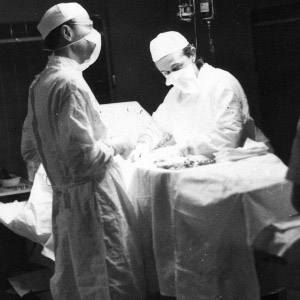
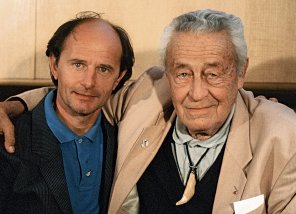
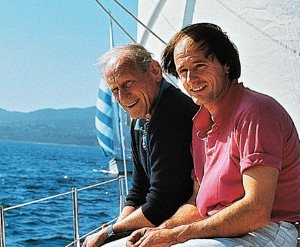
Jean-Louis ETIENNE a un parcours assez singulier, puisqu’il a débuté par une formation de tourneur-fraiseur avant de faire médecine. Après un internat en chirurgie, une spécialité de nutrition et de biologie du sport, il met ses compétences de médecin au service d’un rêve : explorer, arpenter le monde.
Il fait ses premières traversées de l’Atlantique sur le Bel Espoir du Père Jaouen pour la réhabilitation des toxicomanes, puis avec Alain Colas pour un record de l’Atlantique.
En 1977-78, il est médecin sur Pen Duick 6 d’Eric Tabarly pour la Course autour du monde. Après de nombreuses expéditions en Himalaya, en Patagonie, au Groenland Jean-Louis Etienne, réalise sa première grande aventure personnelle.
Le 11 mai 1986, il est le premier homme à atteindre le pôle Nord en solitaire, tirant lui-même son traîneau pendant 63 jours. Fort de cette expérience, il se lancera dans l’organisation de ses expéditions.
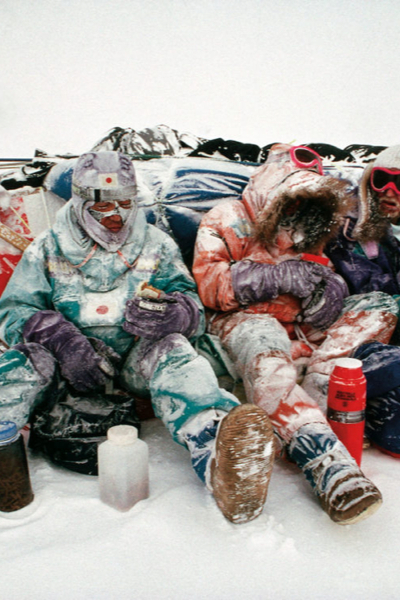
Entre juillet 1989 et mars 1990, il est co-leader avec l’Américain Will Steger de l’expédition internationale Transantarctica et réussit en traîneaux à chiens la plus longue traversée de l’Antarctique jamais réalisée : 7 mois, 6 300 km.
Infatigable défenseur de la planète, Jean-Louis ETIENNE a mené entre 1990 et 1996 plusieurs expéditions à vocation pédagogique et scientifique pour faire connaître les régions polaires et comprendre le rôle qu’elles jouent sur la vie et le climat de la terre. Il fait construire le voilier polaire Antarctica, aujourd’hui Tara, et part en 1991-1992 pour la Patagonie, la Géorgie du Sud et la péninsule Antarctique. En 1993-1994, c’est l’expédition au volcan Érébus, en 1995-1996, l’hivernage au Spitzberg.
Au printemps 2002, il réalise la Mission Banquise, une dérive de trois mois sur la banquise du pôle Nord, à bord du Polar Observer pour un programme de mesures et d’informations sur le réchauffement climatique.
De décembre 2004 à avril 2005, il dirige une expédition sur l’île Clipperton avec des chercheurs du Muséum, IRD, CNRS, pour réaliser un inventaire de la biodiversité et un état de l’environnement de cet atoll français du Pacifique.
De septembre 2007 à octobre 2008, il est Directeur Général de l’Institut Océanographique – Fondation Albert 1er, Prince de Monaco.
En avril 2010, il réussit la première traversée de l’océan Arctique en ballon rozière.
Depuis 2023, il conduit ses expéditions à bord de PERSEVERANCE, voilier océanographique d’exploration en milieu extrême. Son amour pour les grandes aventures le conduira bientôt sur l’océan Austral pour un programme scientifique d’envergure, inédit. A bord de PERSEVERANCE certifié « glace », pour la toute première fois de l’histoire, des scientifiques vont pouvoir étudier l’océan Austral aux 4 saisons. Immense puits de carbone et moteur de la circulation océanique mondiale, cet acteur majeur du climat est aussi riche d’une biodiversité encore méconnue. Le programme Southern-Ocean 4 Seasons 2027-2030 intéresse de nombreuses institutions scientifiques, d’autant qu’il s’inscrit dans la perspective de l’année polaire internationale 2032 – 2033.
"INSPIRERS"
WALTER BONATTI
Italian mountaineer
At fifteen, I dreamed of the mountains. His solo ascents of the Drus and the direct winter climb on the north face of the Matterhorn fascinated me.
LIONEL TERRAY
French mountaineer
“The monotony of the world frightened me; I dreamed of a noble and free existence.” At sixteen, Lionel Terray became my role model.
NATURE
Nature has always been a refuge, a source of peace, inspiration, creativity, and daring.
COLLÈGE TECHNIQUE DE MAZAMET
1959 – 1964
Judged on concrete achievements, vocational training was a path of academic rehabilitation.
DR JEAN-PIERRE GUIBÉ
Surgeon
My mentor revealed to me a passion for surgical technique.
PÈRE MICHEL JAOUEN
Jesuit, sailor, humanist
Beyond appearances, he saw souls battered by life and always reached out to them.
ERIC TABARLY
French navigator
He taught me that one could lead through silence.
BERNARD MOITESSIER
Navigator, writer, environmentalist
I had written on the wall of my student room, “you can’t stop a seagull from taking to the open sea”, an excerpt from The Long Road.
JEAN-HENRI FABRE
1823 – 1915
A scholar of nature, entomologist, naturalist painter, writer and talented educator, he initiated me to express complex phenomena simply.
HANDMADE HOUSES
Book
This book, discovered in 1975 in California: there was no longer any doubt, I would one day build myself a wooden house in the trees.
NICOLAS BOUVIER
Travel writer
I realized that “the nomadic state” had something to teach me. Its carefully chosen sentences guided me in the search for the right word.
CHRISTIAN BOBIN
French poet
“There is a star placed in the sky for each of us, far enough away that our mistakes will never tarnish it.” I confess to often retreating to these celestial paradises that this contemporary poet offers us.
FRIDTJOF NANSEN
Scientist, North Pole explorer, politician, Nobel Peace Prize laureate
His ship, the Fram, inspired me to build Antarctica, now named Tara.
ERNEST SHACKLETON
British explorer of the South Pole
He had the audacity and the lucidity to lead his teammates to the very edge of life without ever losing any of them.
THÉODORE MONOD
Naturalist, pacifist, explorer of the Sahara
“Beyond a certain level of power, man is no longer part of the ecological network.”
JEAN JAURÈS
French politician
“Courage is striving for the ideal while understanding reality.” Speech to high school students in Albi in 1903. Still relevant today.
JEAN-BAPTISTE CHARCOT
Doctor and polar explorer
Despite pressure from his father, a renowned neurologist, he abandoned medicine to pursue his passion: exploring polar regions, particularly aboard the famous Pourquoi Pas?
J.J. CALE
American singer-songwriter and guitarist
For decades and still today, his country blues are always a little boost when the need arises.
HAROUN TAZIEFF
Agronomist, geologist, mining engineer, volcanologist and Russian writer (naturalized Belgian then French)
Aventurier des volcans, j’ai aimé ses audacieux engagements sur le terrain, la liberté de ses coups de gueule, il m’a inspiré l’expédition au volcan Erebus.
PAUL-EMILE VICTOR
French polar explorer, scientist, ethnologist and writer
All those who are still discovering the great polar adventure today owe a thought to PEV. “I would like to come with you, not this time but in a future life.”
On board Antarctica, Brest, 1991
SCRIPPS
Institution of Oceanography – UC San Diego
Understanding and protecting the planet, finding solutions to our most urgent environmental challenges.

